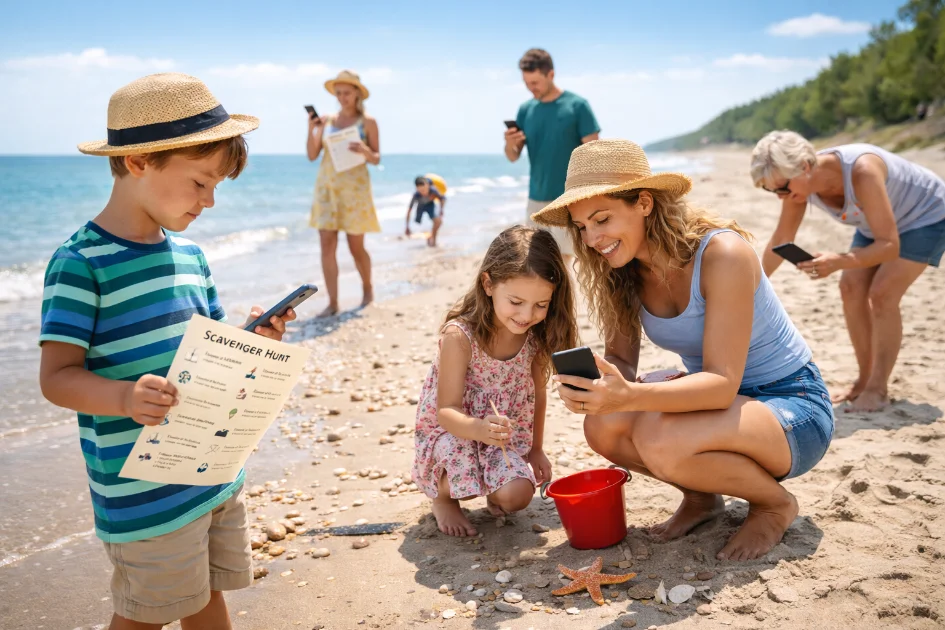
40+ Neighborhood Scavenger Hunt Ideas: Block Parties, Walking Tours & Family Fun
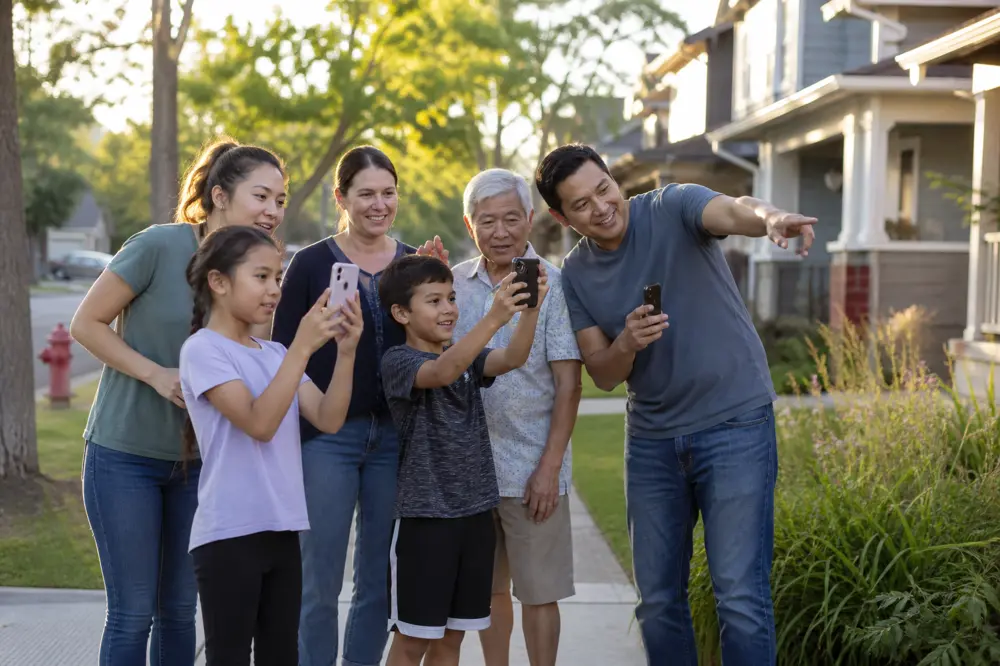
Discover 40+ neighborhood scavenger hunt ideas for block parties, family walks, and community events. Includes photo challenges, sidewalk safety rules, step-by-step setup, and how to run one with Seekr Games.
40+ Neighborhood Scavenger Hunt Ideas: Block Parties, Walking Tours & Family Fun
You do not need a park reservation or a mall map to run a great scavenger hunt. Your own block already has street signs, porches, trees, hydrants, and little landmarks people walk past every day without seeing. A neighborhood scavenger hunt turns that ordinary loop into a game.
In this guide, you'll discover 40+ specific neighborhood scavenger hunt ideas, how to set boundaries so the hunt stays safe, and how to run it with Seekr Games so players submit photos from their phones instead of juggling clipboards.
What Is a Neighborhood Scavenger Hunt?
A neighborhood scavenger hunt is a walking game on public streets and sidewalks near a home, apartment complex, or community center. Players complete photo tasks, check in at landmarks, or follow clues from one corner to the next. It is not a treasure hunt through other people's yards.
Most neighborhood hunts you will find online are still paper checklists. Riddlelicious lays out the classic version: print a list, hand kids a clipboard, and walk together. Photo hunts and clue-to-clue walking routes are the other two common formats. A digital hunt keeps the same idea (look, don't touch, stay on the sidewalk) and adds live scoring so you are not collecting papers at the end.
Typical format
- Duration: 30–60 minutes for families, up to about 90 minutes for a block party
- Area: 2–6 blocks you have already walked yourself
- Group size: a family of 4, a birthday group, or a block-party crowd
- Goal: photograph public-facing details, not collect objects from yards
Why Neighborhood Scavenger Hunts Work
Zero travel
Everyone starts at the host house, a parklet, or the end of the driveway. That is why neighborhood hunts show up as a "walkabout" format in party-planning guides such as Dream Event's scavenger hunt party guide: expand past the backyard, set a route, and set a hard boundary so nobody wanders onto a busy road.
Built for mixed ages
Strollers, scooters, and grandparents can all stay on the sidewalk. Put easy color-and-shape finds next to tougher architecture tasks so a mixed team always has something to do.
It actually uses the neighborhood
Community-event hunts work when the route hits real local features (a mural, a Little Free Library, a fire station from the sidewalk). Globe Chaser's community-event guide puts safety, distance, and points of interest first. That is the right order for a block hunt too.
A natural fit for block parties and National Night Out
National Night Out is an annual community-building night (the first Tuesday in August in most places). A photo hunt is an easy activity to add beside the cookout: neighbors already outside, kids already roaming, and a clear "be back at the host driveway" end point.
Better than paper once the group splits up
Clipboards work if one adult leads one group. The moment you have three teams going different directions, you want photos in one place and a live leaderboard instead of "text me when you're done."
How to Run a Neighborhood Scavenger Hunt
Step 1: Walk the route first
Do a quiet lap the day before. Note public objects that will still be there tomorrow (signs, hydrants, murals, libraries). Skip anything in a private garden. Mark a start/finish and streets that are off-limits.
Step 2: Set the rules out loud
Before anyone leaves:
- Stay on sidewalks and public paths. Do not cut through yards.
- Look, don't touch mailboxes, decorations, or plants.
- Kids under 10 walk with an adult. Buddy system for everyone else.
- No crossing arterial roads. If you hit a busy intersection, that is the edge of the map.
- Return by a set time whether you are finished or not.
Those rules match the safety list neighborhood hunt writers already use (supervise young kids, define the blocks, respect property). Write them in the hunt description so late joiners see them too.
Step 3: Pick a format
- Open photo list: everyone sees every task. Fast, social, good for block parties.
- First to finish: start together, race to complete the list.
- Time Trial: available as a custom hunt if neighbors will trickle in and start on their own clocks. Contact Seekr to set that up.
Step 4: Build it in Seekr Games
Create the hunt at seekrgames.com. Add each task with a player-facing objective (what they see on their phone) and a solution the AI can check:
- Text description for generic finds ("red door," "fire hydrant").
- Image match for a specific mural, painted utility box, or Little Free Library.
- Location check for a corner, park entrance, or the host driveway. Combine location with text when you want "a stop sign at this intersection," not any stop sign in town.
Save each task, then use Test on your phone while you walk the route. If a prompt is too vague, tighten it. If it is too picky, loosen the text.
Step 5: Invite people and start
Click Host Hunt. Players open a phone browser at seekr.it, enter the code or scan the QR, and pick a name. No app download, no player account. Start the hunt from the waiting room, watch the live leaderboard, and override the AI if a clearly correct photo gets rejected. End the hunt when time is up so scores lock.
Self-serve hunts go up to 50 participants. The first 3 active players are free. For a bigger block party, contact Seekr.
42 Neighborhood Scavenger Hunt Ideas
Tasks below are photo tasks you can actually verify. Do not ask players to take objects, enter yards, or knock on doors unless you have planned that with specific neighbors in advance.
Street details & architecture
- A house number that adds up to 10 (or another number you choose).
- A red front door, photographed from the sidewalk.
- A mailbox that is not a plain steel box (color, shape, or decoration).
- A wood fence with a distinctive gate.
- A porch swing, rocking chair, or pair of matching chairs.
- A flag or banner on a porch (any kind).
- A stained-glass window, transom, or decorative door glass.
- A fire hydrant.
- A stop sign with your street name visible in the same frame.
- A house with a balcony or rooftop deck.
Nature on the block
- A tree trunk with bark that looks nothing like the tree next to it.
- A flower in bloom, photographed without picking it.
- A bird on a wire, rooftop, or feeder.
- Four different leaf shapes, all in one photo.
- A puddle reflection of a house or sky.
- A plant growing in a sidewalk crack.
- A vegetable garden or fruit tree, shot from the public sidewalk.
- A yard statue, gnome, or painted rock that faces the street.
Photo challenges
- The whole team pointing at the same landmark.
- Everyone's shoes in a circle on the sidewalk.
- The group's shadow on a garage door or fence.
- A teammate's shirt matching a nearby house color.
- A posed "we are holding up this street sign" forced-perspective shot.
- A Little Free Library, with one book title readable.
- A painted mural, utility box, or storm-drain art.
- A jump photo at a marked crosswalk, taken only on the walk signal.
- A reflection in a car window or a shiny mailbox.
- The finish-line photo: whole group in front of the host house.
Block party & community
- The community bulletin board, lost-pet flyer, or HOA notice board.
- A local shop window from the sidewalk (no going inside required).
- A public park bench or bus stop.
- A playground structure, if it is a public park.
- The exterior of a school, library, fire station, or church on your route.
- A decorated porch (holiday lights, team flags, or welcome sign).
- A neighbor-painted kindness rock sitting in public view.
- A team high-five at the start corner.
Kids, strollers, and easy finds
- Something yellow that is not a vehicle.
- Something that starts with the first letter of your street name.
- A bicycle, scooter, or stroller (parked, not in traffic).
- A basketball hoop visible from the sidewalk.
- Sidewalk chalk art (draw it if none exists, then photograph it).
- A birdhouse, dog house, or cat patio visible from the street.
If you only have 20 minutes, pick 12. If you have a full block party, use all 42 and split people into walking groups of 3–5.
How to Use Seekr Games on Your Block
Neighborhood hunts are where Seekr's three verification methods earn their keep.
Text description covers the generic list: hydrant, red door, yellow object. Keep the wording short. "Fire hydrant" works better than a paragraph.
Image match is for the one mural, the one Little Free Library, or the one painted electrical box that should not be substituted. Take the reference photo from the sidewalk, fill the frame, and leave a little environment around the object.
Location check pins a task to a corner. Combine it with text when you want "a stop sign at Maple and 3rd," not a stop sign from a different neighborhood.
Seekr also tries to stop players from reusing photos they already have on their camera roll, so the hunt stays a live walk, not a gallery dump.
Hosts watch photos come in, tap a player for stats, and can mark a task complete if the AI is being stubborn. Players just use the camera on their phone browser.
For a deeper walkthrough of building tasks, see Creating a custom scavenger hunt with Seekr and Creating scavenger hunt tasks by simple descriptions. For the live-room flow, see How to host a scavenger hunt with Seekr Games.
Pro Tips
- Pre-walk at the same time of day. A mural that is sunny at 10am may be in deep shade at 6pm.
- Write the boundary into the hunt description. "Stay on Oak, Pine, and 2nd. No crossing Main."
- Do not hide objects in yards. Photograph what is already public-facing.
- Give mixed-age teams a mix of tasks. Easy colors plus one architecture puzzle.
- Test three tasks on your own phone before guests arrive. Save is required before Test works.
- Plan a weather backup. Porch details, house numbers, and mailboxes still work in light rain. Cancel if there is lightning.
- Assign one adult per kid group. Neighborhood hunts fail when eight-year-olds cross a street alone.
- Use late join. Block-party guests show up in waves. They can scan the QR after you start.
- Override instead of arguing. If a photo is obviously the right hydrant, mark it complete and keep the line moving.
- End on purpose. Click End Hunt so the leaderboard freezes and you can cheer winners instead of waiting for stragglers who walked an extra block.
FAQ
Q: How big an area should we use?
A: Two to six residential blocks is plenty. Walk it yourself. If the loop takes you more than 20 minutes at an easy pace, shrink it.
Q: Is it okay to send kids out alone?
A: No. Keep an adult with children under 10, and keep everyone in pairs. Set a return time.
Q: What if we live in apartments, not houses?
A: Use the building's public areas and the surrounding sidewalks: lobby art (if allowed), numbered doors from the hallway if the property manager agrees, bike racks, courtyard trees, nearby transit stops, and storefronts.
Q: Can we include local businesses?
A: Photograph windows from outside unless you asked the owner. A "find the bakery logo" photo from the sidewalk is enough.
Q: How do I stop people from using photos they already have?
A: Seekr tries to prevent reused camera-roll photos, so players need a fresh shot from the hunt. Location check still helps make sure they were actually on that corner.
Q: Do players need to download an app?
A: No. They join at seekr.it in a phone browser.
Q: How many people can play?
A: Self-serve rooms go up to 50. The first 3 active players are free (an active player is someone who attempts or completes a task). Bigger than 50 is a custom hunt. Contact Seekr if you need that.
Q: What if someone has limited mobility?
A: Keep the loop short and curb-cut friendly. Put several tasks on a single block so a stroller or wheelchair is not covering six blocks for one hydrant.
Q: Can we run this as a Time Trial during National Night Out?
A: Time Trial is a custom setup. If households will trickle in and start on their own clocks, contact Seekr. For a self-serve hunt, start everyone together and use first-to-finish.
Q: Paper vs phone?
A: Paper is fine for one walking group. Once you have multiple teams, phones keep proof, order, and the leaderboard in one place.
Ready to Hunt Your Own Block?
A neighborhood scavenger hunt does not require a venue. It requires a route you have walked, a list of public details, and clear sidewalk rules. Build the tasks, share the code, and let people look at the block they thought they already knew.
Start your neighborhood scavenger hunt with Seekr Games. No app download. Players join at seekr.it. You host from the browser.