Beach Scavenger Hunt Ideas: 40+ Activities for Kids, Adults & Families
Discover 40+ beach scavenger hunt ideas for kids, adults, and families, plus step-by-step hosting with Seekr Games. Mix simple photo finds with a typed answer, a drawing, and a tap-to-finish check-in. No app download. Players join at seekr.it.
Beach Scavenger Hunt Ideas: 40+ Activities for Kids, Adults & Families
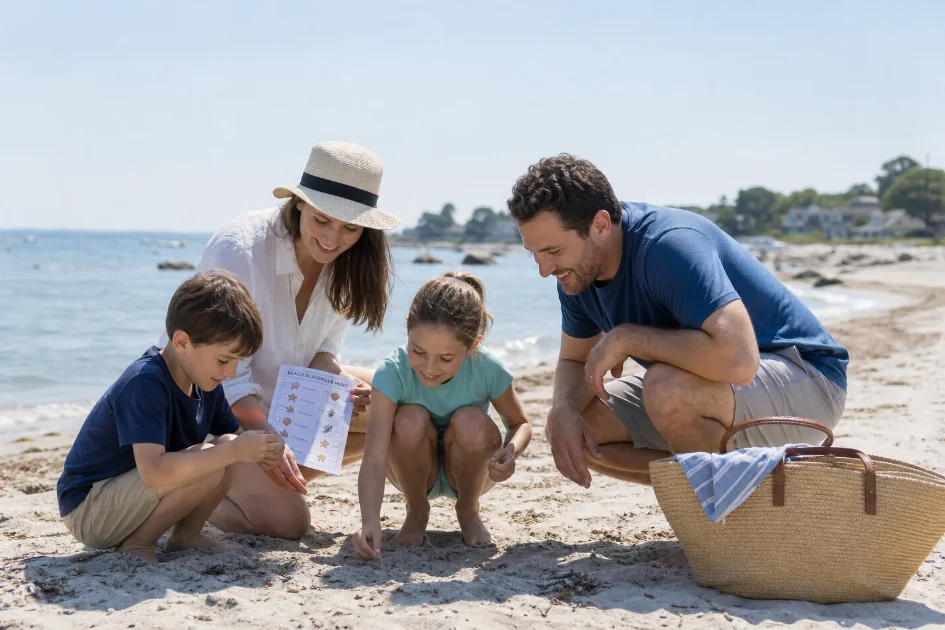
A beach day is easy until the towels are down and nobody knows what to do next. A scavenger hunt turns that lull into a game: find a seashell, snap a picture, doodle a crab, then chase the next find instead of sitting in a row waiting for the next swim.
In this guide, you'll get 40+ beach scavenger hunt ideas for kids, adults, and mixed groups, plus a leave-the-shells-where-they-are way to play. You can host it with Seekr Games from a phone browser. No app download.
What Is a Beach Scavenger Hunt?
A beach scavenger hunt is a timed set of finds along the sand, dunes, and tide line. Players look for shells, driftwood, tracks, and odd shapes. Most of the list is photos, so you leave the beach as you found it. You can also mix in a typed answer, a quick drawing, or a tap when someone arrives. That is different from a beach treasure hunt, which is usually about buried prizes and clues. A scavenger hunt is a list. A treasure hunt is a trail.
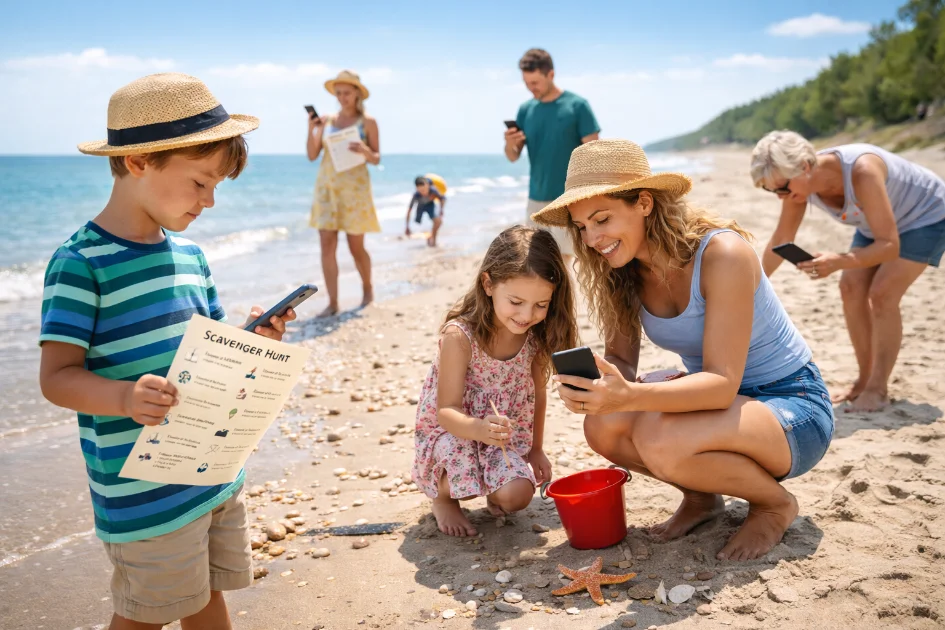
Paper lists blow away. Clipboards get sandy. A phone hunt keeps the list, the photos, and the leaderboard in one place.
Typical format
- Duration: 30–60 minutes, or a little longer for adults
- Area: a marked stretch of beach you walked first, with a clear water line
- Group size: a family, a birthday group, or a team outing
- Goal: find things, leave living things alone, pick up a little trash on the way back
Why Beach Scavenger Hunts Work
The beach already has the list
Shells, seaweed, driftwood, birds, and footprints change with the tide. You do not have to hide objects.
Kids, teens, and adults can share one hunt
Young kids hunt colors and shapes. Adults do photo dares and observation tasks. Put both on the same list so mixed groups are not waiting on a separate kids' version.
Photos beat collecting
Leave No Trace asks people to leave rocks, plants, and other natural objects where they are. The National Park Service says the same for shells and similar finds in protected places. A photo of a spiral shell lets you keep the find without emptying the beach for the next family.
It scales without a stack of clipboards
Four people or forty can run the same list. Split into small walking groups, share one code, and watch the live leaderboard instead of chasing teams down the shoreline.
How to Run a Beach Scavenger Hunt
Step 1: Walk the beach first
Note the water line, dune fences, and any closed nesting areas. Pick a start (the umbrellas, the lot, the pier) and an edge (no further than that jetty). Low tide gives you more sand and more tide pools.
Step 2: Set the rules out loud
- Stay between the marked edges. No climbing dune fences.
- Photograph natural objects. Do not pocket live shells, coral, or animals.
- Kids stay with an adult. Buddy system for everyone.
- Water is for swimming later, not for hunting. Tide pools: look, don't pocket.
- Bring water, hats, and sunscreen. End on time even if the list is unfinished.
Step 3: Keep each find simple
One object per photo. "Find a seashell" works. "Five shells in one frame" is a stretch for the AI that checks the picture. Same for three colors of seaweed or three sand textures piled into one shot. If you want more shells, make them separate tasks.
Not everything has to be a photo. A typed answer, a drawing, or a tap-to-finish button keeps the hunt from feeling like a camera checklist.
Step 4: Build it in Seekr Games
Create the hunt at seekrgames.com. Pick the task type that matches the find:
- Photo + text description for generic finds ("seashell," "piece of driftwood"). Keep it to one thing.
- Photo + image match for a specific pier, lifeguard tower, or mural.
- Location check for the start umbrella, a jetty, or the parking lot meetup.
- AI text match when you want a typed answer. You write a validation prompt ("a type of shell"); they type whelk or clam and the AI decides if it counts.
- Drawing for a couple of fun extras, like sketch a seagull. A few is plenty.
- Button for "I arrived at the towels" or "I agree to stay out of the water until we swim."
Sections group tasks. Put the rules button in the first section, then lock the shoreline finds in a second section so that list stays hidden until everyone has agreed. Two groups is enough for a beach day.
Save each task and Test it on the sand with your own phone before guests arrive. Seekr also tries to block reused camera-roll photos, so players need a shot from the hunt.
Step 5: Invite people and start
Click Host Hunt. Players open a phone browser at seekr.it, enter the code or scan the QR, and pick a name. No app, no player account. Start from the waiting room, watch the leaderboard, and override the AI if a clearly correct photo gets rejected. End the hunt so scores lock.
Self-serve hunts go up to 50 participants. The first 3 active players are free. For a bigger beach outing, contact Seekr. Time Trial (households starting at different times) is custom. Contact Seekr if you need that.
46 Beach Scavenger Hunt Ideas
Mix easy photos with a few typed answers, one drawing, and a couple of tap-to-finish tasks. Kids' finds and adult challenges can live on the same list.
Natural finds (photograph, don't pocket)
- A seashell.
- A spiral shell.
- Driftwood that looks like a letter or an animal.
- Sea glass (leave it after the photo).
- A flat skipping stone.
- The smallest shell you can still see in the photo.
- The largest shell on your stretch of sand.
- A feather.
- A piece of seaweed.
- An empty crab shell.
- A rock with an unusual hole or stripe.
- A sand dollar, only if local rules allow you to even handle it. Photo, then leave it.
- Washed-up coral, never pulled from the water.
- Something that starts with the first letter of your name.
Photo challenges
- Your group spelling a word with shells or driftwood.
- A wave at the moment it breaks.
- The most ambitious sandcastle on the beach, yours or someone else's (ask first).
- A trail of footprints that is not yours.
- A bird, any species, from a distance.
- Your face reflected in a tide pool.
- Someone jumping with the water behind them.
- A boat or paddle craft out on the water.
- The lifeguard tower or a numbered beach marker.
- A sunrise or sunset, if you timed the hunt for it.
Kids and easy finds
- Something yellow.
- Something blue that is not the water.
- A hole in the sand.
- A sandcastle with a moat, even a tiny one you just built.
- Team name written in the sand.
- A heart made of shells, then scattered so you leave no pile.
- A shadow of the group on the sand.
- A crab hole or bird track.
Adults and group dares
- Recreate a classic beach postcard pose, then a second shot that is honest and windblown.
- A one-sentence "review" of this beach written in the sand.
- Two teammates matching a towel or swimsuit color to a nearby umbrella.
- The highest public point you can stand on (dune walkover, pier, rocks that are clearly for walking). Group photo.
- A tide pool, photographed from above. Look, don't pocket.
- A photo that proves you found the last high-tide line.
- Where a creek or runoff hits the salt water, if your beach has it.
- Where wet sand meets dry sand.
Leave the beach better
- A bag or handful of trash you picked up (wear something on your hands). Photograph the haul, then throw it out for real.
- The finish photo: whole group back at the start towels.
Typed answers, drawings, and tap-to-finish
- Type the name of a shell you found. Set the validation prompt to "a type of shell." Whelk, clam, and scallop should pass.
- Draw a seagull. It does not have to be good.
- Button: I agree to stay out of the water until the hunt is over.
- Button: I'm at the start towels.
If you only have 20 minutes, use 12. If you have a full afternoon, use more and split into groups of 3–5. Put 45 in its own section so the rest of the hunt unlocks after people agree to the water rule.
How to Use Seekr Games at the Beach
Beach hunts are messy. Sand, wind, and a moving water line are why a paper list is a bad tool.
Photo + text description covers shells, colors, and shapes. Keep it to one object. "Seashell" beats a paragraph, and it beats "five shells in one photo."
Image match is for a specific pier, mural, or tower that should not be swapped for a lookalike down the coast. Shoot the reference from where players will stand.
Location check pins the meetup, the jetty, or the lot.
AI text match is for a typed answer. You write what a good answer looks like ("a type of bird"). They type seagull or pelican. The AI decides if it counts.
Drawing is a fun extra, not the whole hunt. One seagull sketch is enough.
Button is the tap that means they showed up or they read the rules.
Sections keep later tasks hidden until the first group is done. Rules button first, shoreline finds second.
Hosts see submissions as they come in, tap a player for stats, and can mark a task complete if the AI is being picky. Players only need a phone browser.
More on building tasks: Creating a custom scavenger hunt with Seekr and Creating scavenger hunt tasks by simple descriptions. Hosting flow: How to host a scavenger hunt with Seekr Games.
Pro Tips
- Hunt at low tide if you want tide pools and a wider beach.
- Avoid midday in summer. Morning or late afternoon is easier on skin and photos.
- Write the water rule into the hunt. A button task ("I agree to stay above the wet sand") in the first section works better than a speech nobody hears.
- One object per photo. If you want five shells, that is five tasks, not one crowded frame.
- Test three tasks on the actual sand. Wet shells look different than dry ones.
- Make trash pickup one task, not the whole hunt. People still want to play.
- Give kids color tasks and adults the observation tasks on the same hunt so nobody is bored.
- Use late join. Beach groups arrive in waves. They can scan the QR after you start.
- Override instead of arguing when a photo is obviously the right driftwood.
- End the hunt on purpose so you can swim, eat, or leave before the parking lot jams.
FAQ
Q: How do you make a beach scavenger hunt?
A: Walk the beach, write 12–30 finds, set edges and a time limit, then run it from a phone. Most of the list can be photos. Add a typed answer, a drawing, or a rules button if you want. Seekr hosts the list and checks submissions. Paper works for one small walking group.
Q: What should be on the list?
A: A mix of easy natural finds, photo dares, and one cleanup task. Skip anything alive. Keep photos to one object. A couple of typed or drawing tasks is plenty.
Q: Is it safe for kids?
A: Yes, with adults, a buddy rule, sun protection, and a hard water boundary. Tide pools are look-don't-touch.
Q: Can a large group do this?
A: Self-serve rooms go up to 50. The first 3 active players are free. Split into small walking groups so you are not a mob on one sandbar. Bigger than 50 is custom. Contact Seekr.
Q: Do we need an app?
A: No. Players join at seekr.it in a phone browser.
Q: What if someone uses an old photo?
A: Seekr tries to prevent reused camera-roll photos. Location check still helps prove they were on that stretch of beach.
Q: Best time of day?
A: Early morning or late afternoon, and low tide if you care about tide pools. Midday heat is a bad hunt.
Q: Scavenger hunt or treasure hunt?
A: Use this list for a scavenger hunt. If you want buried prizes and a trail of clues, see Beach Treasure Hunt Ideas.
Q: Can we take the shells home?
A: Default to no. Leave No Trace and many park rules say leave natural objects. Local rules vary. When in doubt, take the photo.
Ready for the Beach?
You do not need a special venue. You need a stretch of sand, a simple list, and a water line nobody crosses. Build the tasks, share the code, and let the beach do the rest.
Start your beach scavenger hunt with Seekr Games. No app download. Players join at seekr.it. You host from the browser.